
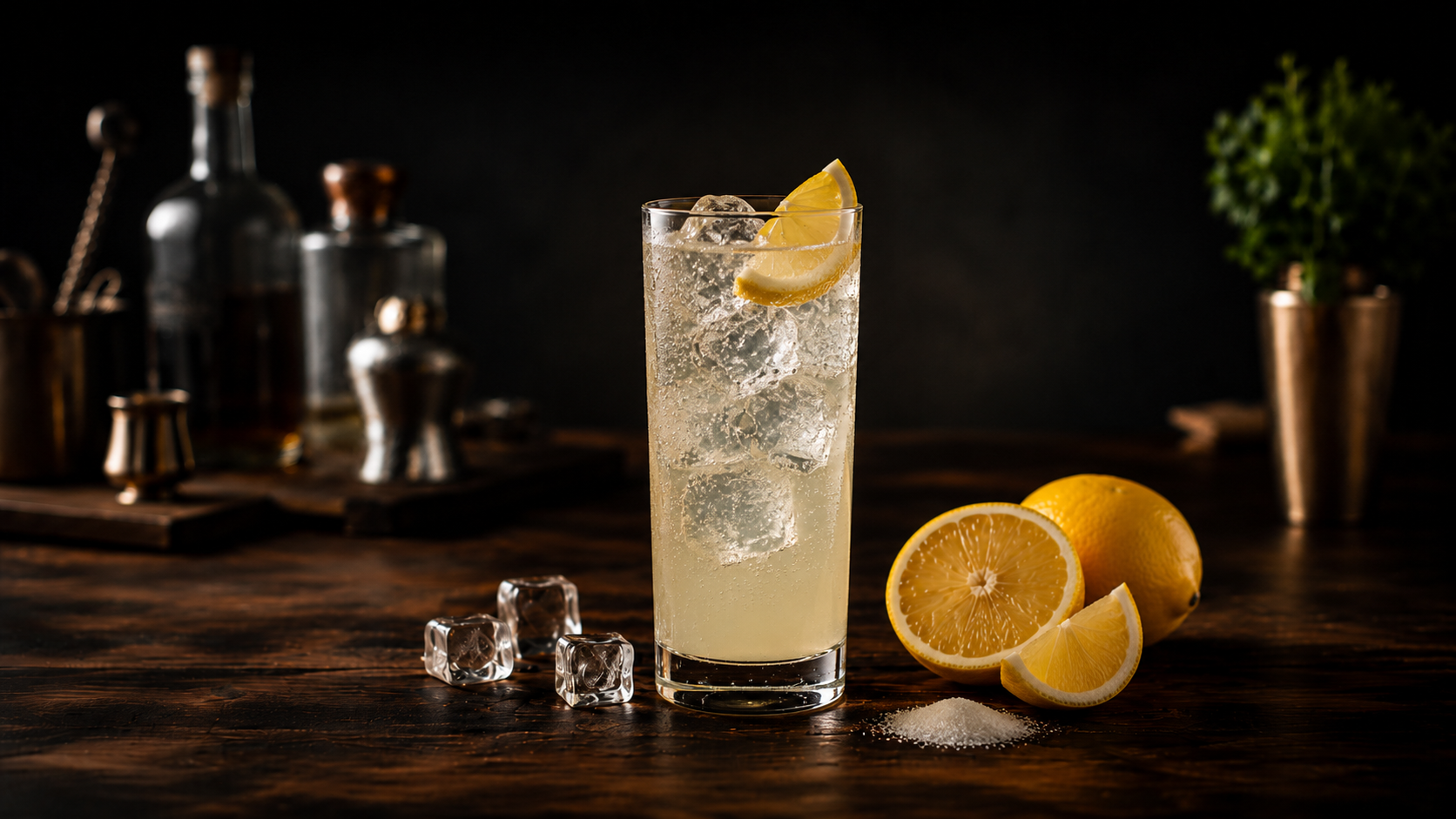
Tom Collins
The Tom Collins is a classic gin highball made with fresh lemon juice, sugar and soda water. Served tall over ice, it combines bright citrus, gentle sweetness, lively bubbles and a clean botanical finish.
(0 ratings)
About recipe
Difficulty
Easy
Prep time
5 min
Method
Highball
Glass type
Built
Instructions
-
1
Fill a Collins or highball glass with ice cubes.
-
2
Pour in the gin, fresh lemon juice, and simple syrup.
-
3
Stir gently to combine the ingredients.
-
4
Top up with soda water.
-
5
Stir once more without losing too much carbonation.
-
6
Garnish with a lemon wheel or slice and an optional maraschino cherry.
What does a Tom Collins taste like?
A well-balanced Tom Collins tastes tart, lightly sweet and very refreshing. Gin provides notes of juniper, citrus peel and herbs, while fresh lemon gives the drink its crisp acidity. Sugar rounds the edges without turning the cocktail into a heavy or syrupy lemonade.
Soda water lengthens the mixture, softens the alcohol and adds a dry sparkling texture. The drink is usually lighter and easier to sip than a short gin sour, although the spirit should still be noticeable. Its finish is clean, zesty and gently botanical, with no single ingredient dominating.
The history of the Tom Collins
The Tom Collins developed during the nineteenth century, although its exact origin is not completely settled. It is closely related to the John Collins, an older gin punch associated with London. Over time, the name Tom Collins became linked with versions made using Old Tom gin, a style that is slightly sweeter than London dry gin.
The cocktail was also connected with the “Tom Collins hoax” of 1874, a popular American prank in which people were told that a man named Tom Collins was speaking badly about them nearby. The joke helped spread the name, but it did not by itself create the drink.
How a Tom Collins is prepared and served
The cocktail is usually shaken briefly with ice, then strained into a tall Collins glass filled with fresh ice and topped with soda water. Some versions are built directly in the glass. A lemon wheel and cocktail cherry are traditional garnishes, though a simple lemon peel gives a cleaner presentation.
Fresh lemon juice and lively soda are essential. Large ice cubes help keep the drink cold without excessive dilution, while gentle stirring preserves the carbonation. Common mistakes include adding too much sugar, using flat soda, under-chilling the gin mixture or filling the glass with so much ice that there is little room for the sparkling element.
When to serve a Tom Collins and popular variations
The Tom Collins cocktail works especially well in warm weather, at brunches, garden parties and relaxed afternoon gatherings. Its acidity and bubbles pair nicely with seafood, salads, grilled chicken, salty snacks and light herb-based dishes. It is best served immediately while the drink remains cold and fizzy.
London dry gin creates a crisp, juniper-led version, while Old Tom gin gives a rounder and slightly richer result. A Vodka Collins replaces gin with vodka, and a John Collins is often made with whiskey in modern recipes. Cucumber, berries or elderflower can be added, but they should support rather than cover the lemon-and-gin structure.
You might also like

Rate this recipe
Choose from 1 to 5 stars and optionally leave a comment.
Ratings and comments
(0 ratings)