
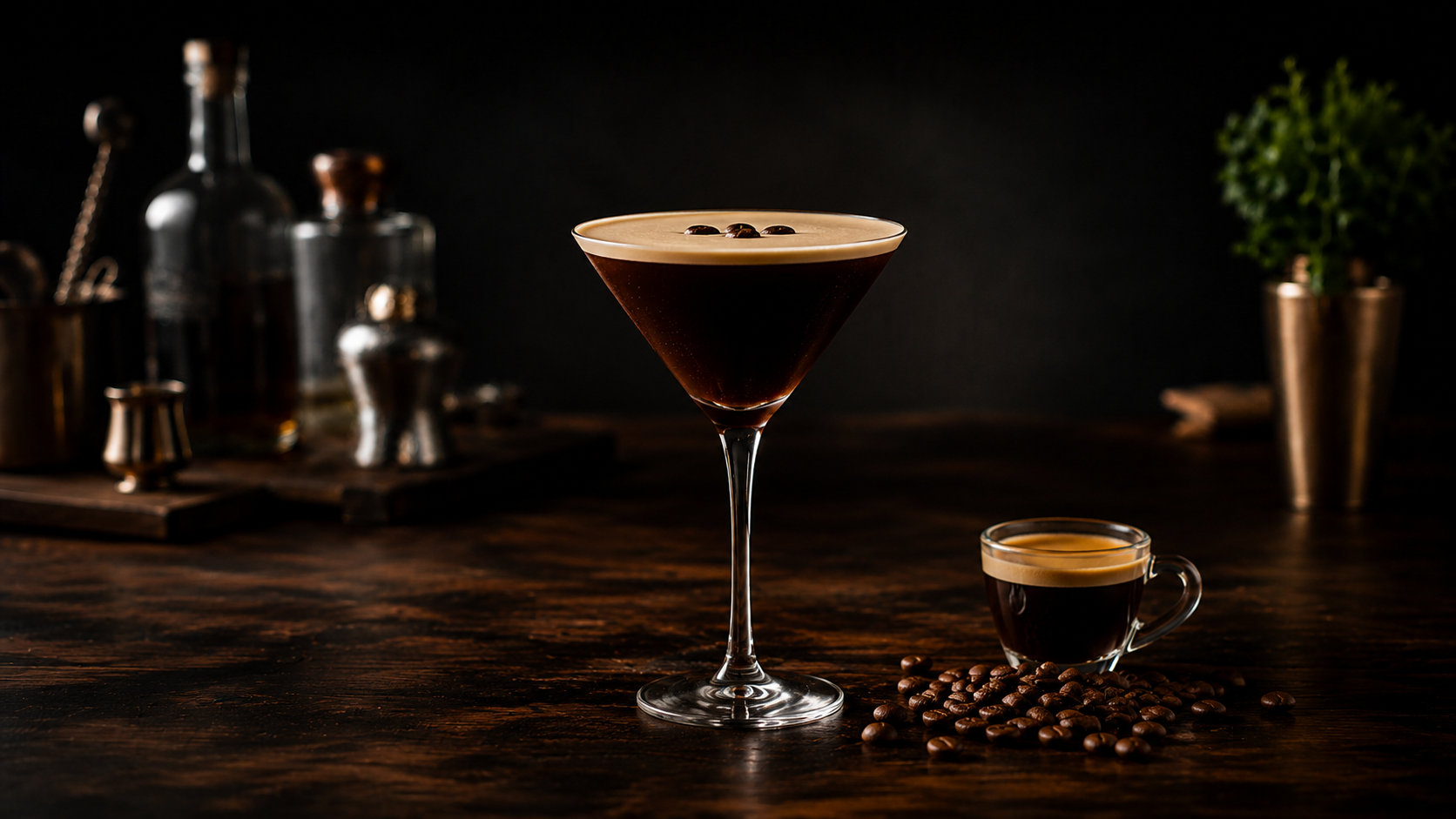
Espresso Martini
The Espresso Martini is a modern vodka cocktail combining fresh espresso, coffee liqueur and a touch of sweetness. Served cold with a creamy foam, it tastes rich, roasted and lively rather than heavy.
(0 ratings)
About recipe
Difficulty
Easy
Prep time
5 min
Method
Highball
Glass type
Shaken
Instructions
-
1
Brew a fresh espresso and allow it to cool slightly.
-
2
Fill a cocktail shaker with ice cubes.
-
3
Add the vodka, coffee liqueur, espresso, and optional simple syrup.
-
4
Shake vigorously for about 15–20 seconds to create a thick foam.
-
5
Double-strain the cocktail into a chilled martini or coupe glass.
-
6
Garnish with three coffee beans.
What does an Espresso Martini taste like?
A well-balanced Espresso Martini tastes bittersweet, smooth and moderately strong. Vodka provides a clean alcoholic base, allowing the coffee to remain the main flavour. Fresh espresso brings roasted bitterness, acidity and a deep aroma, while coffee liqueur adds sweetness and softer notes of cocoa, caramel or vanilla.
The drink should feel silky, with a dense layer of foam on top and a clean coffee finish. It is sweeter than plain espresso but should not resemble a sugary iced coffee. The balance depends on the beans and liqueur used, as a dark roast creates more bitterness while a sweeter liqueur produces a rounder, richer cocktail.
The history of the Espresso Martini
The Espresso Martini was created in London during the 1980s and is widely credited to bartender Dick Bradsell. According to the commonly repeated account, a customer requested a drink that would provide both stimulation and alcohol, leading Bradsell to combine vodka with fresh espresso and coffee liqueur.
The original drink was known by several names, including the Vodka Espresso, before Espresso Martini became standard. Despite its name, it is not a true Martini in the traditional sense because it contains neither gin nor vermouth. The title mainly refers to its presentation in a stemmed cocktail glass.
How an Espresso Martini is prepared and served
The ingredients are shaken hard with plenty of ice, then fine-strained into a chilled coupe or Martini-style glass. Vigorous shaking chills and dilutes the drink while trapping air and coffee oils, which creates its characteristic foam. Three coffee beans are the most familiar garnish, though a light dusting of cocoa is sometimes used.
Fresh espresso gives the strongest aroma and best texture, but it should not be excessively hot when added to the shaker. Weak shaking, stale coffee and too much syrup can leave the drink flat or cloying. Large, solid ice cubes are useful because they chill efficiently without causing rapid over-dilution.
When to serve an Espresso Martini
The Espresso Martini cocktail works particularly well after dinner, at evening parties or as an alternative to dessert. Its roasted flavour pairs naturally with chocolate, tiramisu, caramel, nuts and vanilla-based sweets. Because it combines caffeine with alcohol, it is usually served as an occasional late-evening drink rather than a light aperitif.
Popular variations use rum, tequila or Irish whiskey instead of vodka, adding molasses, agave or grain notes. Vanilla syrup creates a softer profile, while a small pinch of salt can sharpen the coffee flavour. Cold brew may replace espresso for a smoother drink, although it usually produces less foam and a gentler aroma.
You might also like




Rate this recipe
Choose from 1 to 5 stars and optionally leave a comment.
Ratings and comments
(0 ratings)