
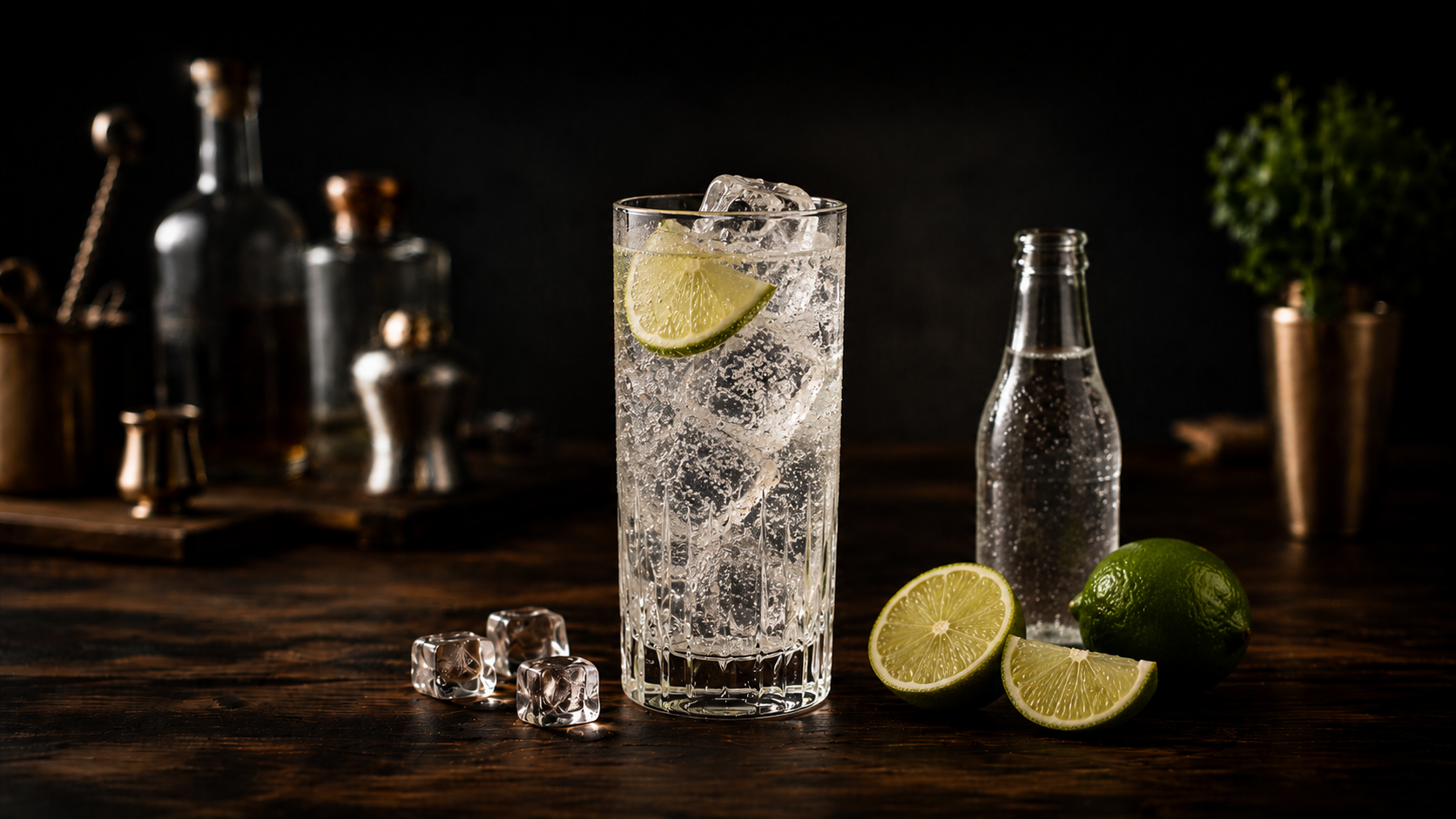
Gin and Tonic
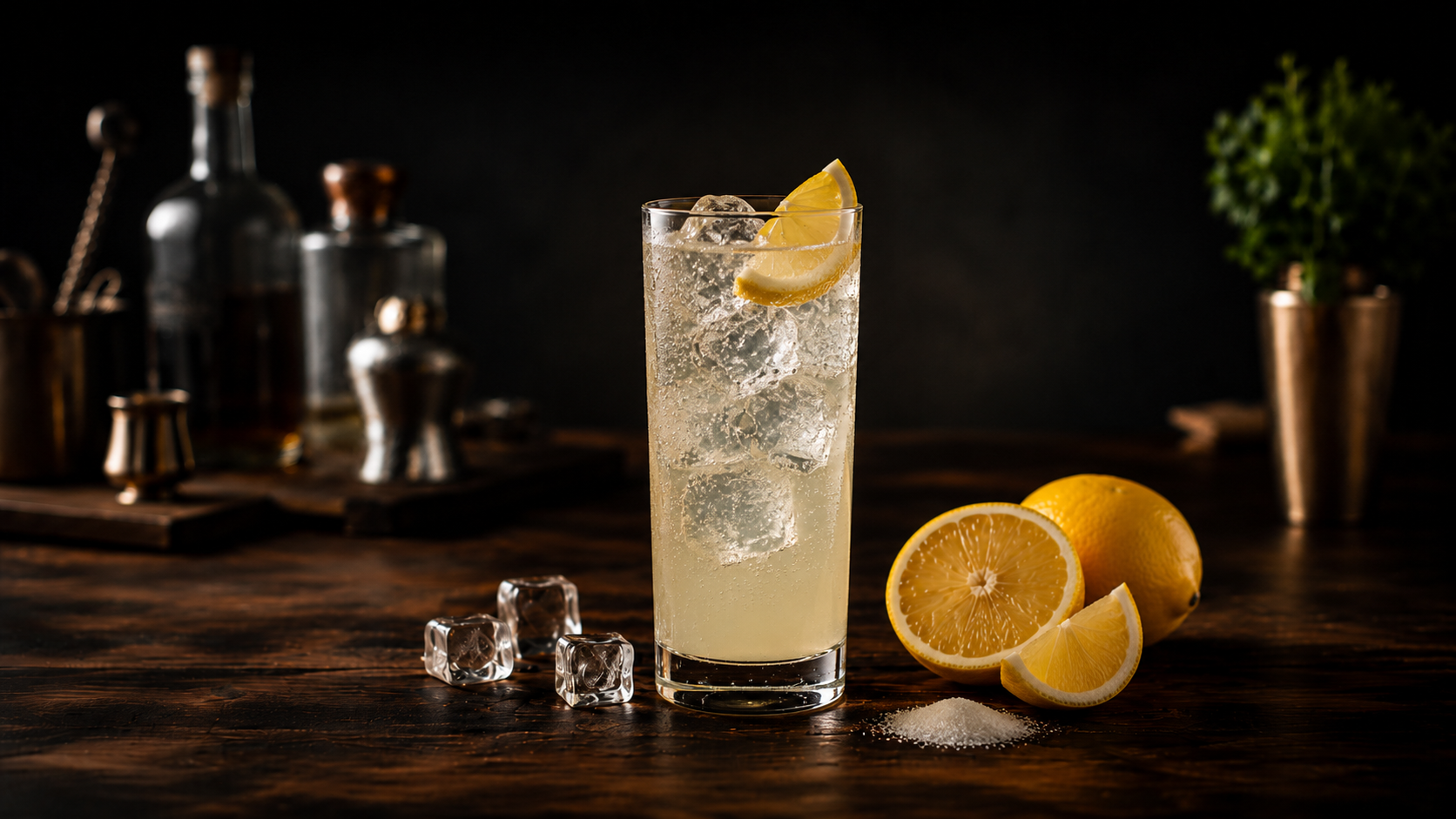
The Gin and Tonic is a classic highball combining gin, tonic water and a citrus garnish. Its crisp carbonation, botanical aroma and distinctive quinine bitterness make it dry, refreshing and easy to customise.
(0 ratings)
About recipe
Difficulty
Easy
Prep time
5 min
Method
Highball
Glass type
Built
Instructions
-
1
Fill a highball glass or large balloon glass with ice cubes.
-
2
Pour the gin over the ice.
-
3
Slowly add the tonic water to preserve its carbonation.
-
4
Stir gently once or twice to combine the ingredients.
-
5
Garnish with a lime wedge or wheel.
-
6
Add an optional garnish such as fresh rosemary, cucumber, or juniper berries.
What does a Gin and Tonic taste like?
A well-balanced Gin and Tonic tastes bitter, botanical and lightly citrusy, with moderate alcohol intensity. Gin provides juniper, herbs, roots and spices, while tonic water contributes sweetness, carbonation and the dry bitterness of quinine. The exact profile changes considerably with the chosen brands.
London dry gin creates a crisp, juniper-led drink, while modern gins may emphasise flowers, cucumber or citrus peel. Tonic should support these flavours rather than cover them with sugar. Proper dilution softens the alcohol, and the bubbles carry the gin’s aroma toward the nose with every sip.
The history of the Gin and Tonic
The drink developed from the use of quinine in British colonial India during the nineteenth century. Quinine was consumed as protection against malaria, but its strong bitterness encouraged people to mix it with water and sugar. Gin and citrus were later added to make the mixture more palatable.
Modern tonic water contains far less quinine than historical medicinal preparations and is enjoyed for flavour rather than treatment. As bottled tonic became widely available, the Gin and Tonic moved from a practical colonial mixture to an internationally recognised highball with many regional serving styles.
How a Gin and Tonic is prepared and served
The drink is built directly in a highball or balloon glass filled generously with ice. Gin is added before chilled tonic water, followed by a gentle stir to preserve carbonation. A lime wedge is traditional in many places, though lemon peel, grapefruit or other garnishes may better suit a particular gin.
Large, solid ice cubes keep the drink cold and slow unwanted dilution. Both the tonic and glass should be well chilled, as warm ingredients quickly flatten the bubbles. Common mistakes include using too little ice, pouring stale tonic, over-stirring or adding several strong garnishes that hide the gin’s botanicals.
When to serve a Gin and Tonic
The Gin and Tonic works especially well as an aperitif, during warm afternoons or at relaxed evening gatherings. Its bitterness and citrus notes pair naturally with olives, salted nuts, seafood, grilled vegetables and lightly spiced dishes. It is best served immediately while the tonic remains lively.
Popular variations use cucumber with floral gin, grapefruit with citrus-forward styles or rosemary with more herbal bottles. Mediterranean tonic adds softer herbal notes, while dry tonic reduces sweetness. Pink gin, flavoured tonic and alcohol-free gin alternatives can also be used, but a simple garnish usually gives the clearest result.
You might also like
Rate this recipe
Choose from 1 to 5 stars and optionally leave a comment.
Ratings and comments
(0 ratings)