
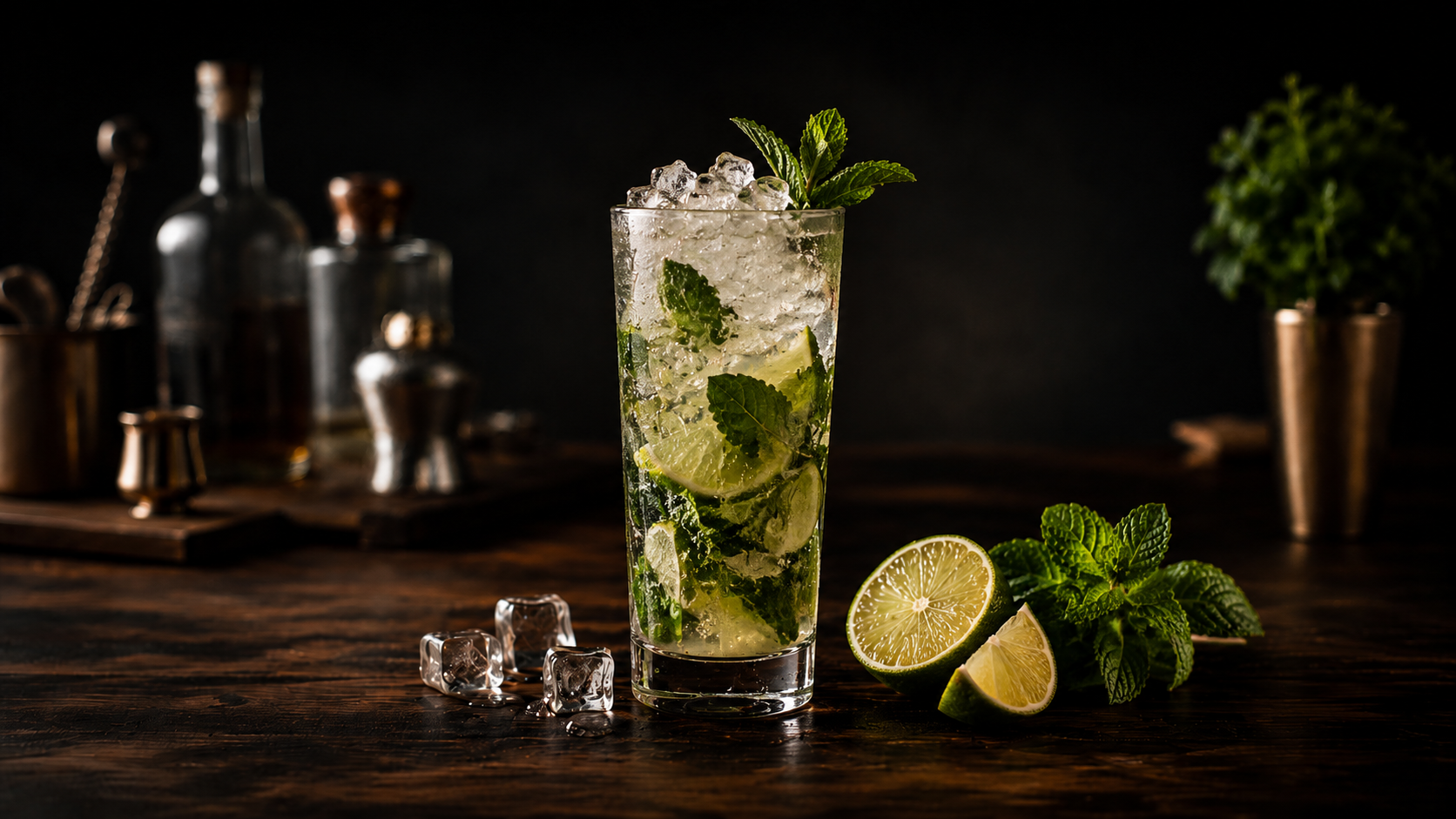
Mojito
The Mojito is a Cuban highball built around white rum, fresh lime, mint, sugar and soda water. Its crisp citrus flavour, cooling herbal aroma and lively sparkle make it refreshing without hiding the character of the rum.
(0 ratings)
Ingredients
white rum
50 ml
lime juice
25 ml
cane sugar
2 teaspoons
mint
8 leaves
soda water
top
ice
optional
crushed
as needed
lime
optional
garnish
1
About recipe
Difficulty
Easy
Prep time
5 min
Glass type
Highball
Method
Muddled
Instructions
-
1
Add the cane sugar and fresh lime juice to a highball or Collins glass.
-
2
Stir until the sugar begins to dissolve.
-
3
Add the mint leaves and gently press them with a muddler or the back of a spoon. Do not crush them too hard, as this may release a bitter taste.
-
4
Pour in the white rum.
-
5
Fill the glass with crushed ice or ice cubes.
-
6
Top up with soda water.
-
7
Stir gently with a long spoon to combine the ingredients.
-
8
Garnish with a fresh mint sprig and a lime wedge or slice.
What does a Mojito taste like?
A well-made Mojito tastes bright, lightly sweet and pleasantly tart. Lime provides the sharp citrus backbone, while sugar softens the acidity without turning the drink syrupy. White rum adds gentle notes of sugar cane, vanilla and pepper, depending on the bottle used.
Fresh mint shapes both the aroma and the finish. It should smell clean and leafy rather than bitter or grassy. Soda water lengthens the drink, lowers the perceived alcohol strength and gives it a dry, sparkling edge. The result is refreshing and easy to drink, although the rum remains noticeable beneath the lime and mint.
The Cuban history of the Mojito
The Mojito is generally associated with Cuba, but its exact origin is uncertain. One commonly repeated account links it to older mixtures of cane spirit, lime, sugar and mint used on the island before modern white rum became widely available. The drink developed into its familiar form during the late nineteenth or early twentieth century.
Havana bars helped establish the Mojito as an international classic, especially as Cuban cocktails became popular with travellers. Several explanations for the name exist, including possible links to the Spanish word mojado, meaning wet, or to mojo, a lime-based seasoning. Neither explanation is universally confirmed.
How a Mojito is prepared and served
The Mojito cocktail is usually built directly in a tall highball or Collins glass. Lime juice and sugar are combined first, followed by mint and rum, then ice and soda water. The ingredients are mixed gently so the sugar dissolves and the flavours are distributed without crushing the mint into small pieces.
Crushed ice is common because it chills the drink quickly and creates the familiar frosty appearance, although small cubes also work. A mint sprig and lime wedge are typical garnishes. The mint should be lightly pressed or slapped to release its aroma; aggressive muddling can tear the leaves and produce unwanted bitterness.
When to serve a Mojito and popular variations
The Mojito drink works particularly well in warm weather, at garden parties, barbecues and relaxed early-evening gatherings. Its lime acidity pairs naturally with grilled seafood, spicy dishes, fresh salads and Cuban-style food. It is best served immediately, before the ice dilutes too far and the mint loses its fresh scent.
Popular variations add strawberry, raspberry, passion fruit or cucumber, while a darker rum creates a richer, more molasses-led version. A Mojito mocktail omits the rum and relies on extra soda, lime and mint. Common mistakes include using bottled lime juice, adding too much sugar, choosing flat soda or overworking the mint.
You might also like

Rate this recipe
Choose from 1 to 5 stars and optionally leave a comment.
Ratings and comments
(0 ratings)